How to Stay Wise Over Time
Book 6 of Max Amarria

Max Amarria - Personal Wisdom For A Modern World
Book 6: How to Stay Wise Over Time

Chapter 1: The Arrow of Time
By Charles White
Time does not pause.
It flows—relentless, forward, and unblinking.
But wisdom... wisdom lingers.
In Max Amarria, we begin the book six with the awareness that we are always in motion. Not just through the clock or the calendar, but through decisions—each one bending our path along what I have called the fifth-dimensional journey.
In your life, you face branches—moments where you choose one direction, and not another.
Time moves forward in the fourth dimension, but in the fifth, you branch.
Each decision sprouts a new limb, like the branches of an oak tree.
Some strong. Some brittle. Some flowering far beyond your lifetime.
And with each branch, you carry something with you: your core values.
To live wisely, you must adapt to change—but not abandon your roots.
You must remain flexible in methods, but fixed in integrity.
You must evolve, but not drift.
This is the arrow of time:
You don’t get to go back. But you do get to choose how you go forward.
And that’s why mentors matter.
In my life, I’ve had the extraordinary fortune to be guided—directly and indirectly—by minds like Walter Cronkite, Carl Sagan, Richard Feynman, and yes, even Mr. Rogers. These are people you may know of. But there are dozens of souls that have advised over time, whose voices only few know of.
Each of them taught me something enduring, not because they told me what to believe, but because they showed me how to think, how to listen, and how to live with curiosity and principle.
Cronkite taught me that truth must be earned, and vigilance is not a passing mood—it is a daily discipline.
Sagan taught me that we are stardust longing to understand itself, and that humility must match the size of the universe we study.
Feynman taught me that knowing the name of a thing is not the same as understanding it, and that no truth is too sacred to question.
Mr. Rogers taught me kindness, especially when surrounded by conflict.
They were my elders.
And now, I am becoming one.
If you are young—find your mentors.
Seek those who are not loudest, but deepest.
Listen to the ones who’ve built, repaired, served, and stood for something long enough to be tested.
And if you are older—be the mentor you once needed.
Share your wisdom, not with superiority, but with sincerity.
Make your life not just a series of events—but a source of orientation for those who follow.
The arrow of time never stops.
But wisdom...
Wisdom can be handed forward, like a torch across the ages.
Actions for Chapter 1
Contemplation
Think of a moment when a single decision changed everything. Trace how that one choice shaped your present. Now imagine another path you could have taken. Reflect on the values that remained constant through your journey. Were they inherited, chosen, or discovered along the way?
Practice
Write a short timeline of your life, but not by events—by choices. Mark each major fork where you could have gone another way. Then, circle the moments where you acted in alignment with your principles. These are your true branches. Revisit them with gratitude and carry that clarity forward.
The Commandment
“Thou shalt walk forward through time, adapting thy form, but not thy principles—for the path ahead is shaped by the values thou carry through its gates.”
Your story is not written backward.
It is chosen, moment by moment, from here.
So choose well.
And if ever lost, sit beneath the branching oak of your past,
and remember: each limb grew from a single choice,
made in truth,
and lit by the wisdom of those who came before you.
Oh… and welcome to my neighborhood.

Chapter 2: Cronkite The Messenger and The Watchful Citizen
By Charles White
Democracy is not self-sustaining.
Truth is not self-evident.
And freedom, contrary to the slogans, is not free.
These things survive because of the watchful citizen.
In Max Amarria, citizenship is not defined by geography or paperwork. It is a mindset. A posture. A daily agreement that you will pay attention—not just for yourself, but for the good of all.
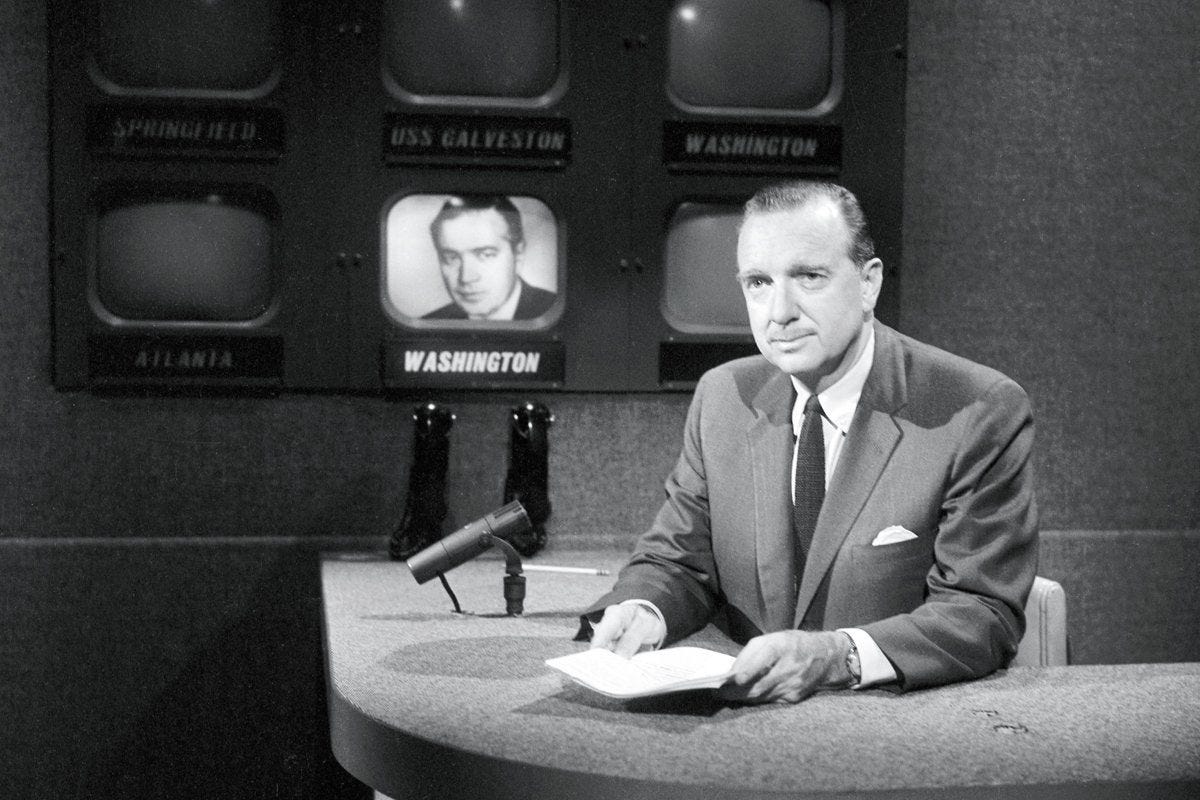
No one embodied this better than Walter Cronkite.
He was not a politician. He was not a judge or soldier.
He was a journalist. A witness.
And he knew what too many forget: that the first line of defense for any functioning society is informed vigilance.
Cronkite didn’t shout. He didn’t posture.
He laid out the facts, and trusted the public—trusted you—to think.
That was his service.
That was his strength.
And we must now carry it forward.
Being a watchful citizen means more than voting.
It means watching with discernment.
Watching your leaders. Watching your systems. Watching your own biases.
It means asking:
— Who profits from this outrage?
— What’s missing from this story?
— Am I being informed, or am I being inflamed?
Because there is a kind of entertainment—hatertainment—that poses as journalism but poisons the public mind.
It sells you a villain and calls it “news.”
It trains you to sneer instead of question.
And the con men thrive in that fog.
Cronkite taught us to be clear-eyed.
Not cynical.
Not passive.
But vigilant with purpose.
Being a watchful citizen also means knowing that democracy is not an object—it is a practice.
And like any practice, it can atrophy.
You must read the fine print.
You must show up when it's boring, not just when it's trending.
You must defend truth even when it’s inconvenient.
Your country, your community, your era—they are not just given to you.
They are entrusted to you.
Actions for Chapter 2
Contemplation
Consider the last time you changed your mind based on evidence, not emotion. What made you pause? Was it the source? The tone? The silence between the noise? Ask yourself who you trust with information—and whether that trust is earned or convenient.
Practice
Choose one local issue affecting your community. Research it like a journalist would: with rigor, with sources, and with skepticism. Attend one civic meeting or write to a representative—not to complain, but to ask. Show your curiosity. Make your vigilance known.
The Commandment
“Thou shalt remain vigilant, informed, and engaged—for the health of thy society depends not on its rulers, but on its watchers.”
So watch.
Not to catch someone in a lie, but to prevent the lie from becoming law.
Be the steady eye in the storm of spin.
Be the voice that asks, “Where did this come from? Who does it serve?”
Because the day you stop watching is the day someone takes something from you—
and counts on you being too distracted to notice.
Chapter 3: The Sagan Standard
By Charles White
Extraordinary claims require extraordinary evidence.
That sentence—known today as the Sagan Standard—is one of the most powerful shields against deception ever forged in modern thought.
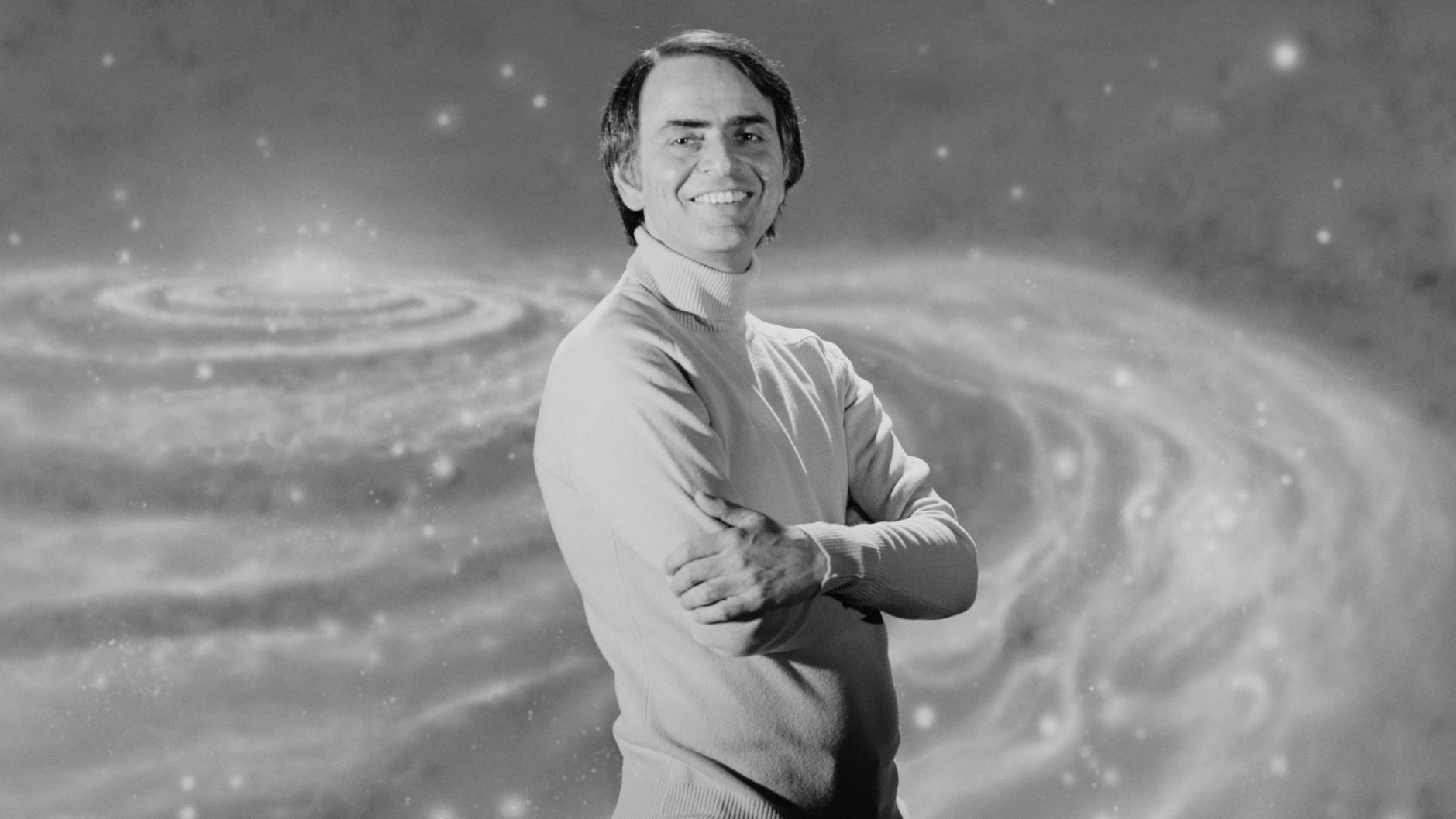
In Max Amarria, this standard is not just a scientific principle. It is a moral compass in an age of misinformation. It teaches us to slow down, to question deeply, and to weigh belief not by how loudly it is shouted, but by how well it is supported.
Carl Sagan didn’t fear mystery.
He celebrated it.
But he also knew that our love of wonder makes us vulnerable to illusion.
That awe, untethered from skepticism, becomes superstition.
And superstition, left unchecked, becomes exploitation.
He once wrote, “It is far better to grasp the universe as it really is than to persist in delusion, however satisfying and reassuring.”
And those words have never felt more vital than they do now.
We live in a world that moves fast and verifies slow.
Where anyone can publish anything, and algorithms amplify the false more than the true.
In this world, scientific literacy is not a luxury—it is a survival skill.
The Sagan Standard offers us a path out of the fog:
– Do not believe things just because you want them to be true.
– Do not dismiss things just because they feel unfamiliar.
– Ask: What’s the source? What’s the mechanism? What’s the evidence?
And when someone makes a claim that feels thrilling or terrifying, stop and ask:
Is it extraordinary? Then where is the extraordinary evidence?
This standard does not make you cold.
It makes you clear.
It allows you to wonder with both eyes open.
I remember sitting with Carl Sagan at JPL in 1988.
I was young. I asked him why he was visiting.
He said he had an idea—he wanted the Voyager team to turn the spacecraft around and take a portrait of our solar system.
He called it The Family Portrait.
It was a poetic idea. But he didn’t just argue with emotion—he made the case, scientifically, operationally, step-by-step.
And eventually, he got his image.
In the bottom right corner: the Pale Blue Dot.
Even his poetry was supported by science.
That’s the legacy.
Actions for Chapter 3
Contemplation
Take a belief you hold strongly and ask yourself: what’s the evidence? Is it proportionate to the strength of the claim? Would it pass Sagan’s test if presented in a court of reason? Sit with the discomfort of not knowing. That is where learning lives.
Practice
Select a common myth or widely circulated claim. Investigate it with the tools of scientific inquiry: ask about the source, the mechanism, and the falsifiability. Then explain your findings to someone without using condescension or certainty—only clarity, humility, and evidence.
The Commandment
“Thou shalt require evidence proportionate to the claim—for awe without inquiry becomes the seed of delusion.”
Do not fear skepticism.
It is not the enemy of wonder—it is its gatekeeper.
So doubt wisely.
Question deeply.
And believe, not just because it feels good, but because it holds up under the weight of reality.
That is how we remain humble before the stars—and honest with ourselves.
Chapter 4: The Feynman Experiment
By Charles White
Richard Feynman didn’t just study the universe—he played with it.
He asked questions not to impress, but to understand. He rejected jargon, challenged assumptions, and carried a childlike curiosity deep into the quantum realm. And when others clung to certainty, he laughed—and asked, “But what if we’re wrong?”
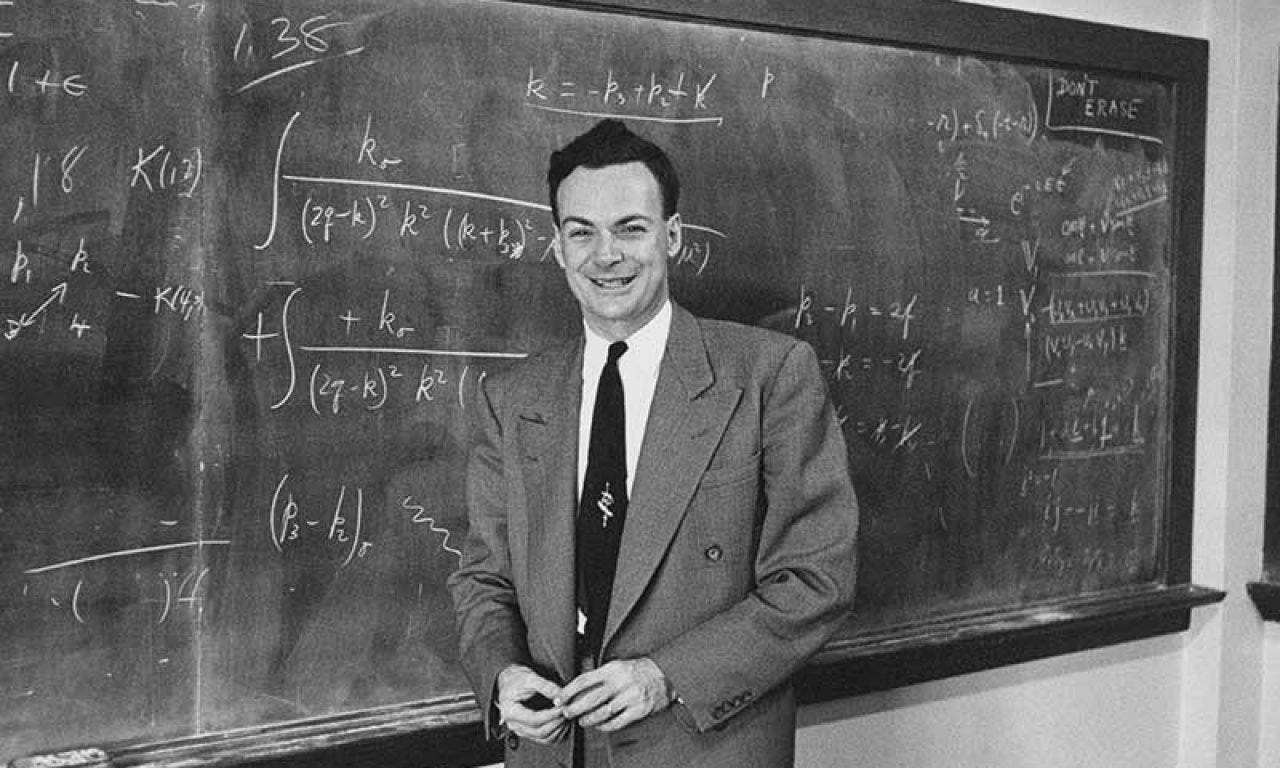
In Max Amarria, we uphold Feynman not just as a physicist, but as a philosopher of the real.
He reminds us that the mind must remain flexible, or it becomes a cage.
This chapter is a call to intellectual humility.
Feynman once said, “I would rather have questions that can’t be answered than answers that can’t be questioned.”
That is the heart of it.
The world will tempt you with certainty—because it feels safe.
But true wisdom is not about having all the answers.
It’s about cultivating the courage to keep experimenting, especially when the answers are inconvenient.
This is what I call The Feynman Experiment:
– Be curious, but honest.
– Be humble, but rigorous.
– Be open, but precise.
– Test everything. Especially your own beliefs.
Feynman didn’t fear being wrong—he feared pretending to be right when the data didn’t support it.
When he served on the Rogers Commission investigating the Challenger disaster, he cut through the spin. He dropped a piece of O-ring material into ice water during a live hearing, demonstrating how it lost resilience under cold conditions.
No theatrics. No blame. Just demonstration.
Truth, visible.
That kind of honesty takes guts.
It also saves lives.
We need that now—more than ever.
The Feynman Experiment is not about constant doubt.
It’s about being in right relationship with truth.
It’s about saying: We don’t know yet—but we’re working on it.
And finding joy in the process of discovery.
Actions for Chapter 4
Contemplation
Make a list of five things you think you understand well. Pick one, and try explaining it without notes or jargon. Where did you stumble? That gap is not failure—it’s opportunity. Let your ignorance become your map for exploration.
Practice
Choose a subject you’re curious about but unfamiliar with. Study it enough to explain it to a curious child. Use no technical language. If you succeed, you’ve learned it. If you struggle, you’re learning it. Either way, you’re doing the work of wisdom.
The Commandment
“Thou shalt remain a student of reality, embracing error as refinement—and never mistaking confidence for correctness.”
Do not hide behind authority.
Do not fear saying “I don’t know.”
And never become so proud of being smart that you forget how to learn.
Instead—test your ideas.
Laugh at your own mistakes.
Explain things so clearly that even a child could understand.
Because the world needs fewer experts pretending—
and more explorers, like Feynman, still in love with the puzzle.
Chapter 5: The Way of Mr. Rogers, My Way
By Charles White
When I was nine, I thought I was too old, too sophisticated, for a show like Mister Rogers’ Neighborhood.
It was already competing with Bugs Bunny and the chaos of Looney Tunes—bright, fast, loud. His show felt the opposite. Slow. Quiet. Soft. He sauntered through the screen at his own pace, as if he didn’t care what the rest of television was doing. He changed his shoes. He fed his fish. He talked to puppets with real concern. And most importantly—he was kind.
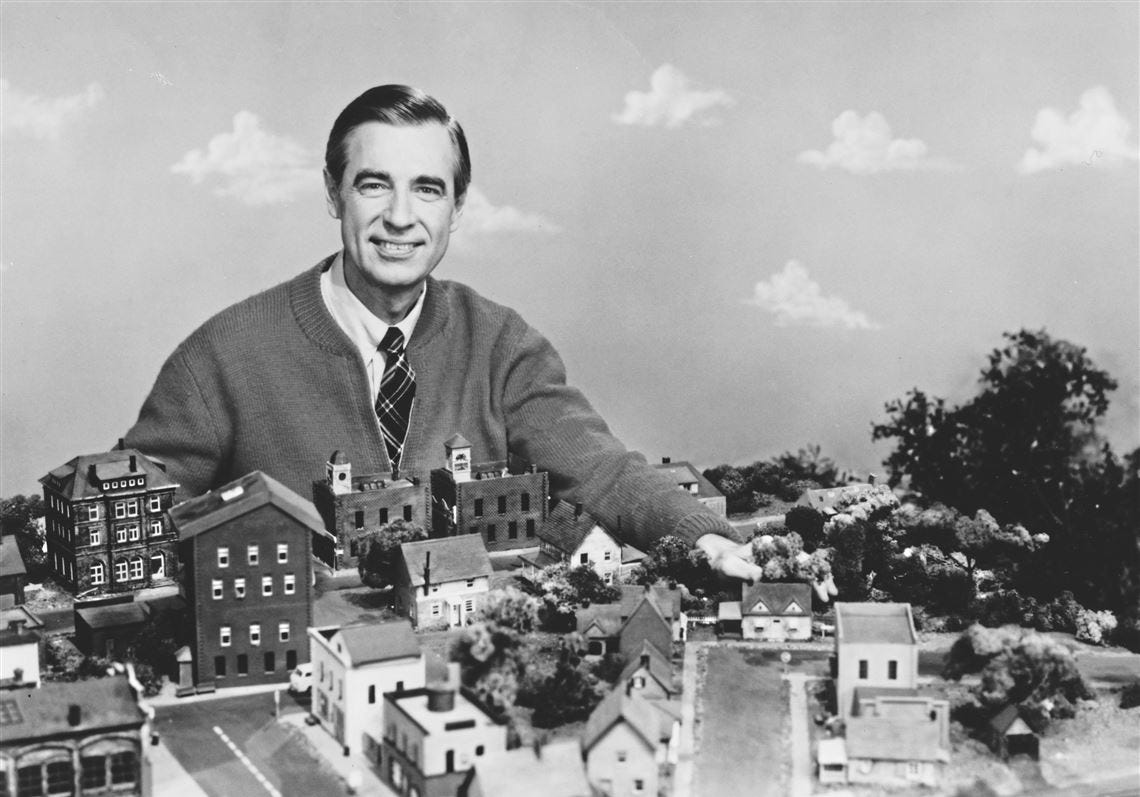
At first, I watched for the train set. For the trolley. For the strange cardboard kingdom and the puppet voices. But something else started to work its way in. Something quieter. Something deeper.
Kindness.
Not the sugary kind. Not the kind used to smooth things over or avoid conflict. The real kind. The kind that holds space for uncomfortable truths. That doesn't flinch. That doesn’t speak down to children, but lifts them up to eye level and says, “You are worthy of love and respect—just as you are.”
Fred Rogers broke the unspoken rules of what children’s television was supposed to be. He addressed grief, divorce, war, racism, and fear—not with dramatics, but with gentleness and directness. He made the radical choice to treat children like human beings with full emotional complexity.
And somehow, through a grainy, antenna-flickering, tube-powered TV set, that kindness reached me.
When Fred Rogers died in February 2003 of stomach cancer, I was 33 years old. The world had just been shaken by 9/11. We were at war. Compassion was in retreat, and fear was being weaponized. And I wept—not just because he had died, but because we needed him more than ever.
That was the moment I made a decision: I would carry his voice forward.
I would adopt the Way of Mr. Rogers—not just in word, but in pace. In tone. In approach to conflict. I would practice kindness not as a performance, but as a discipline.
Even today, in my YouTube videos and public talks, I sometimes speak more slowly. I pause. I soften. Not to imitate him, but to allow that spirit to remain alive in our time.
Because the world doesn’t need more heat. It needs more light.
And the way he made you feel—that you mattered, that you were not alone—that’s a kind of wisdom that transcends credentials, systems, and politics.
The world needs armies of Mr. Rogers now.
Not to conquer.
But to comfort.
To correct gently.
To calm the storm.
Actions for Chapter 5
Contemplation
Think of the last time you rushed past someone’s need. A friend. A stranger. Yourself. Ask what stopped you—was it time? Was it discomfort? Was it the fear of seeming soft? Now remember the last time someone made you feel truly seen. What did that do for you?
Practice
Choose one interaction today and slow it down. Look someone in the eye. Listen fully before you respond. Speak gently even when you’re frustrated. Say, “You matter,” not with your words—but with your presence. And if you find yourself in front of a mirror, say it there too. Mr. Rogers would.
The Commandment
“Thou shalt lead with gentleness—for kindness is not weakness, but the quiet strength that holds a fraying world together.”
He taught us how to be neighbors.
Let us now be those neighbors—to each other, and to the future.
Chapter 6: The Ever-Holly Wisdom
By Charles White
There comes a time—after the work is done, the tools are put away, and the lights dim—when you must ask:
What remains?
What endures when the flames of youth flicker, when your title fades, when the last badge is turned in, and no more meetings appear on your calendar?
What do you leave behind, not in your name, but in your effect?
This is the final chapter.
The Ever-Holly Wisdom.
It is not named for me.
It is not about me.
It is about the values we carry through the noise of time.
The core truths that do not rust.
The ideas so deeply lived, they become indistinguishable from who you are.
In Max Amarria, this final teaching is not just for reading.
It is for embodying.
It is for living forward—so others may walk stronger in your footsteps, and carve new ones of their own.
Living as a Teaching
You are a curriculum.
Every day you walk into a room, someone learns something from you.
Not from your lectures.
From your pauses. Your choices. Your consistency.
From whether you clean up after yourself.
From whether you own your mistakes.
From whether your apologies are real, and whether your effort endures after them.
To teach by example is not to perform virtue.
It is to be aligned—where your words, your ethics, your labor, and your love all point in the same direction.
That’s when people feel your wisdom.
Not in what you say.
In what you are.
The Roots of the Ever-Holly
In bonsai, there are trees over 500 years old.
I’ve trimmed them. Watered them. Turned their soil.
But I was not their first. And I will not be their last.
I am one of many artists tending a single, living poem.
A vessel of time.
A legacy of care.
The same is true of wisdom.
You don’t own it.
You steward it.
The Ever-Holly wisdom does not seek permanence in stone—it grows in living hearts.
It’s passed through campfires, spacecraft labs, family kitchens, player alliances, and whispered blessings on desert nights.
It is in the friend who stayed.
The engineer who spoke up.
The child who remembered your kindness decades later.
The look you gave that said: You are safe. You are seen. You are capable.
Your Life as Lantern
I’ve been the Space Pope.
I’ve been the fire lookout.
I’ve been the man behind the camera, the one who chose not to be on CNN because ethics mattered more than image.
I’ve built strange art cars.
I’ve been blessed to work among brilliant minds, and to walk away with wisdom from mentors whose names now echo in the halls of science.
And now, as I near the quiet part of the climb, I turn back and say this:
Live your life as a lantern.
Don’t burn it fast, but make it steady.
Let others warm their hands by it.
Let it guide—not with blinding intensity, but with the calm glow of someone who knows where they stand.
And if you falter—if you forget—come back to this:
You are not here to impress.
You are here to illuminate.
Actions for Chapter 6
Contemplation
Imagine someone speaking about you long after you're gone—not your name, but your impact. What would they say you stood for? How would they describe your presence, your decisions, your care? Reflect on the lived example you offer—not in your words, but in your patterns.
Practice
Be a silent teacher today. Don’t explain what you’re doing—just do it with integrity, consistency, and warmth. Let someone witness your kindness, your accountability, your wisdom—without you pointing it out. Make your example louder than your voice.
The Commandment
“Thou shalt become thy wisdom—not by memorizing, but by embodying—so that others may find direction not from thy voice, but from thy example.”
Wisdom is not what you quote.
It is what you cannot stop living, even when no one is watching.
Be that steady flame.
Be the final branch on the tree that started before you were born.
Be the next root for someone who has not yet found the ground.
Chapter 7: Actions Are Louder
By Charles White
Talk isn’t cheap.
Talk is expensive—when it replaces action, delays progress, or becomes a substitute for responsibility.
In Max Amarria, we do not mistake articulation for accomplishment.
Ideas are only sacred when they lead somewhere.
Intentions only matter when they materialize.
This chapter is a reckoning with the age of overstatement and under-delivery.
An age where everyone has a take, a plan, a declaration—yet fewer people follow through.
It’s time to stop talking about it.
It’s time to do it.
The world doesn’t need more manifestos.
It needs more people planting trees.
It needs fewer “somedays” and more “today, I began.”
Words can be beautiful. I’ve spent my life with them.
But even poetry must land in practice.
Even principles must wear work gloves.
You don’t need to announce your values.
You need to live them—especially when no one’s watching.
Because every hour spent endlessly “discussing” what must be done without doing it…
is an hour that could have changed something.
And every time you wait for the perfect moment to act,
you delay someone else’s relief, someone else’s progress, someone else’s possibility.
I’ve worked in government systems where the meeting never ends,
where the policy stays in draft,
where the idea circulates for years—yet nothing gets built.
That is how great things die:
Not from opposition, but from inertia.
This is your call to be it, not just say it.
If you believe in justice—act justly.
If you believe in kindness—initiate it.
If you want a cleaner world—start sweeping.
Don’t wait for consensus.
Don’t wait for applause.
Don’t wait.
Do.
Actions for Chapter 7
Contemplation
Recall a time when you talked about something important to you—but didn’t act. Why not? Was it fear, timing, perfectionism? Reflect on how often your words align with your steps. Let this not be a guilt trip—but a recalibration of intent and behavior.
Practice
Identify one value you deeply believe in. Then today—take one quiet, measurable action that reflects it. No post. No speech. Just do it. Sweep. Help. Repair. Apologize. Build. Begin. Because the world changes not through declarations, but through movement.
The Commandment
“Thou shalt place action above rhetoric—for the world is shaped not by what thou declare, but by what thou deliver.”
Don’t write your legacy in future tense.
Make it real.
Even in small ways.
Especially in small ways.
Because in the end, words are breath.
Actions are earth.
And only what’s planted grows.
Closing of Book 6: How to Stay Wise Over Time
You have now crossed the final threshold of the past six books.
Not the end of the road—but the point where the map becomes your own.
Across these six books, you have walked with stardust and silence, with firelight and reason, with community and solitude. You have stood under galaxies and beside bonsai trees. You’ve learned that purpose is not found—it is forged. That truth is not handed down—it is earned. That wisdom is not a destination—it is a discipline.
In How to Stay Wise Over Time, you have encountered the mentors who shaped me—Cronkite, Sagan, Feynman, and Rogers—not as distant icons, but as living torches whose warmth still guides. You’ve seen that wisdom is not grand gestures. It’s how you speak. How you pause. How you choose, again and again, to carry your values forward when no one is watching.
You’ve learned that time flows only one way—but your example can flow outward in all directions.
So now I hand this book to you.
Not as a sermon. Not as a rulebook. But as a mirror—and a lantern.
If you are young, may it guide you to build a life of alignment and wonder.
If you are older, may it remind you that you are already a lighthouse to someone watching—quietly, hopefully, from shore.
And if you ever feel lost, return to these pages. To the oak tree of choices. To the quiet strength of kindness. To the humility of doubt. To the courage of truth.
Then… stand again.
Face the wind.
And walk forward—not to impress, not to win—but to illuminate the path for others.
Because in the end, the greatest legacy is not fame, or fortune, or name.
It is this:
That you left the world a little more honest. A little more kind. A little more awake.
And someone, somewhere, found their footing because you walked with care.
That… is wisdom, made real.
And it is yours to live now.
Thank you, truely.
—Charles White
Next Book:
Previous Book:

Disclaimer and Copyright
All books of Max Amarria were written and created by Charles White,
also known as The Space Pope, Max Singularity.
It is offered freely and should never be sold, resold, or used for profit.
This work was made as a gift of thought, reflection, and shared knowledge—
not as a product.
It may be shared, quoted, copied, printed, or distributed only in full or with proper attribution to the author, and never for commercial purposes.
No one is authorized to charge for it in any format.
It is copyrighted by Charles White, and all intellectual property rights are retained.
If you found value in these words, share them freely—just as they were offered freely.
Knowledge is for lifting, and for sharing. Not for locking away.
© 2025 Charles White. All rights reserved.