
Space Explorer, Mine Hunter...
Memories from the surface of a blue planet, and from below

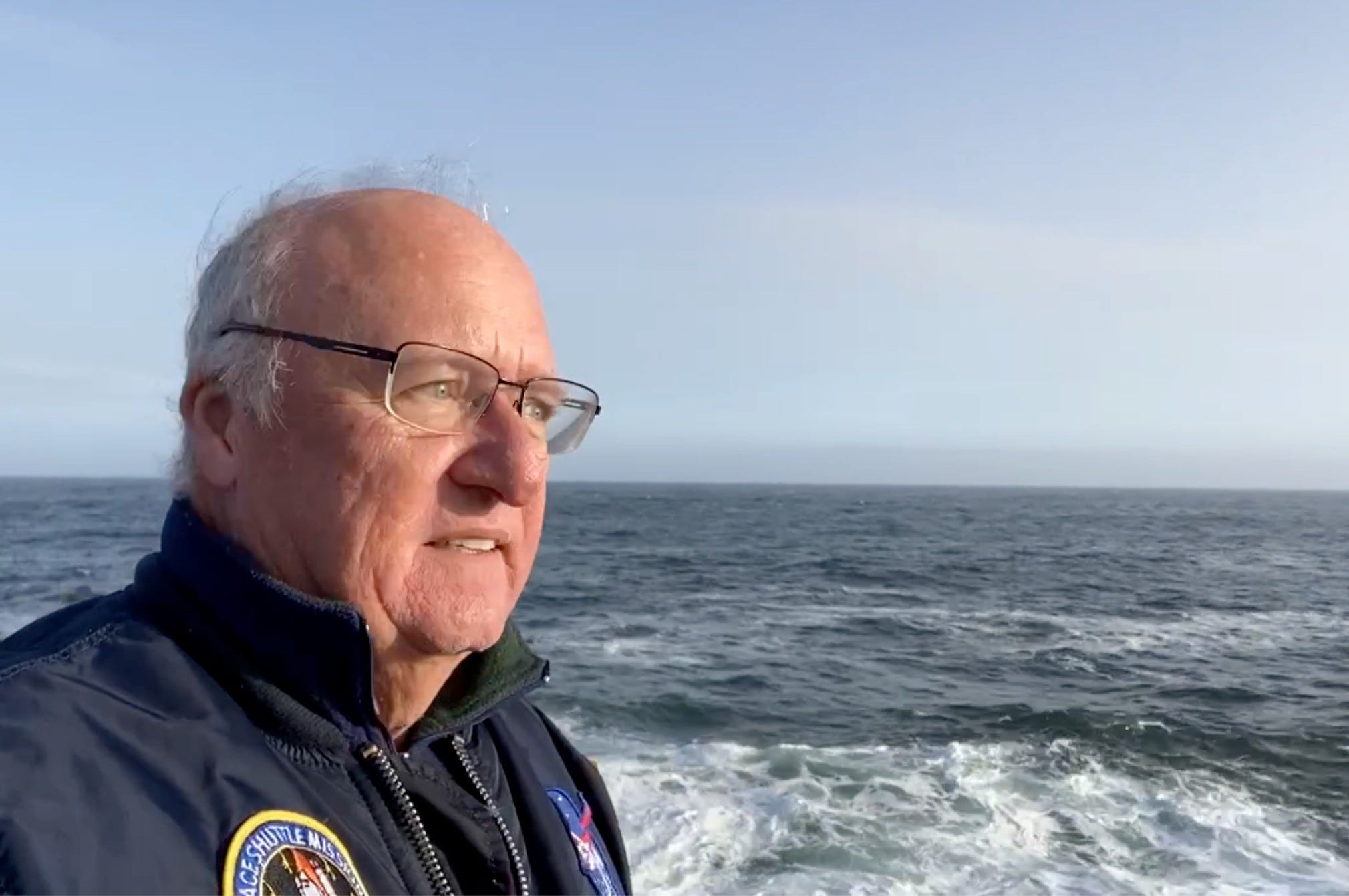
[Photo: Charles White overlooking the sea]
Ok something else about me you may not know...
In 2008, as part of a special assignment I was doing for the Department of Defense through JPL, I was asked to help with a U.S. Navy Mine Warfare data modeling effort that had become stuck. The work fell under the Office of Naval Research, and the first meetings were held at ONR in Arlington, Virginia. I was told that two Navy mine warfare organizations, one centered at Naval Surface Warfare Center Panama City Division in Florida, and the other tied to the Naval Oceanography mine warfare community at Stennis Space Center, Mississippi, had been at odds over the data model for more than three years. By the time I arrived, it was clear that the problem was no longer just technical. It was also about terminology, perspective, and ownership.
[Logo: Office of Naval Research]
The solution they chose was unusual, but smart. Rather than send in another insider from the mine warfare world, they brought in a technically credible science person with no mine warfare background. That was me. My role was to serve as a neutral facilitator, someone who understood complex systems, classification, and structured thinking, but who did not come with tribal baggage from either side. In other words, I was there to help them talk to each other in a common language.
The first meeting took place on May 5, 2008. Then, on July 23, 2008, at the Navy MIW COI Workshop, I led a taxonomy workshop for the working group. On July 24, we began developing the initial Mine Warfare taxonomy. Participants included Dr. Megan Cramer, Victor Leung, Paul Berryman, Marco Gobbo, Jeanne Holm, Brad Staton, Randy Maurer, Christina Strahan, John Stitt, Keith Kile, and me, Charles White.
What followed was both fascinating and exhausting. I had to learn their world as I helped them organize it. They taught me terms like limpet mines and barrel mines. We spent long hours mulling over the meaning of a single word like “track,” a term that seemed simple on the surface but carried multiple meanings and implications within Mine Warfare. That was the work in miniature, not just collecting words, but adjudicating meaning.
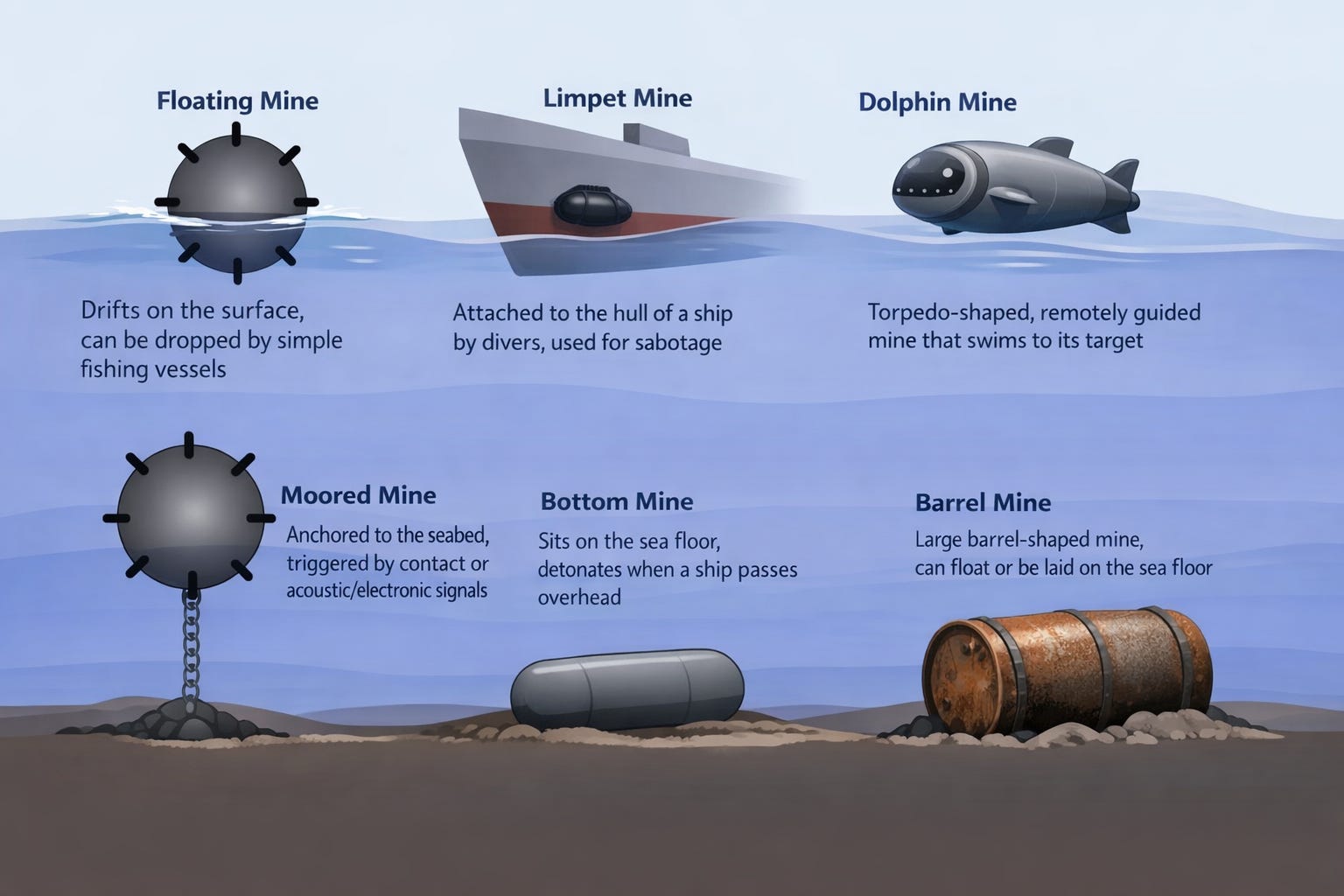
[Graphic: A few of the types of mines Mr. White had to learn about]
The taxonomy was later adjudicated through more than 140 MIW community-wide changes. That alone says how much discussion, refinement, and negotiation it required. Not everyone liked me, and not everyone liked the process. But the effort began to move faster, and the job got done. Afterward, Megan Cramer wrote: “Fantastic! Thanks again for everyone’s dedication to this effort. I don’t know about you all, but I learned a lot not only about taxonomies but also about MIW. Again, I appreciate all the expertise that everyone contributed to this effort to make it a reality.”
Lucky for me, I did not arrive at that Navy assignment empty-handed. My private pilot experience, my work with the U.S. Naval Sea Cadets, and my life membership in the Navy League had already given me a cultural and operational feel for the maritime world. Combined with my systems thinking and technical experience at NASA/JPL, that background helped me step into a room full of specialists and still be useful. I was not a mine warfare insider, and that was exactly the point. I was there to help translate, structure, and facilitate. For obvious reasons, I did not talk about this chapter of my life very often, even though the work itself was unclassified. My progress on that effort, and the success of helping the Navy MIW Community of Interest move past a long-standing impasse, led to other Department of Defense related work through JPL, some of it more sensitive.
Today, with renewed tension in and around the Strait of Hormuz, I think about that MIW work differently. The Strait is one of the world’s most important maritime choke points. When that corridor is threatened, mine warfare becomes intensely practical. Naval mines can obstruct sea lanes, damage warships and merchant vessels, and create fear and delay even before a single explosion occurs. Mine countermeasures forces exist to detect, classify, and clear mines so vital waterways can remain open and commerce can continue to flow. In that environment, taxonomy and data modeling stop being abstract. They help joint forces share the same picture, the same categories, the same terminology, and the same operational understanding. They help commanders, analysts, and operators make faster and safer decisions. In the real world, that means saving lives, protecting ships and cargo, and reducing the risk of confusion in moments when confusion can be deadly.
So while I may not approve of the world events that make such work necessary, I am proud that my JPL experience contributed in some small way to helping not only our armed forces, but also the wider global economy that depends on safe passage through dangerous waters.
Now, in retirement, I look back on these memories with a certain quiet perspective. Space exploration was always my first love and highest professional priority. It was where my heart lived, and where I believed humanity’s future was calling. But alongside that calling was something else, a duty to be useful when my country needed help. I never set out to be part of the machinery of conflict, yet when asked to bring order, clarity, and knowledge to difficult problems, I answered. That, too, was service. And so I carry both truths with me: my deepest passion was always to help humanity reach outward toward the stars, but my duty, when called upon, was to help protect those still living and working here on Earth.
Charles White, Space Explorer and Mine Hunter
P.S. I cracked the NAVY up when I said, “A mine is a terrible thing that waits.” They saw what I did there.
DEEP DIVE with John and Ingrid
A review of the article by talk show hosts John Harper and Ingrid Sorensen
Great read! Even how the word “track” can mean different things really stood out - It reminded me of early EVE Online. Mines made sense on paper, but players used them in ways that broke the game - lag, gate traps, no counterplay—so CCP removed them. The idea wasn’t wrong, but it didn’t match real behavior. Feels similar here. Sometimes the problem isn’t the system—it’s how people understand and use it.